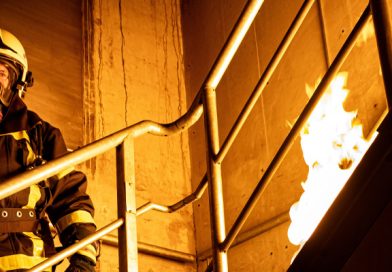
The Fire Hazards Associated with Multiple Layers of Paint

Want To Know More?

Ask us / the article supplier for additional information...


Receive Means of Escape's Newsletter
Over the past 25 years, there have been a number of well-documented fires where the rate of spread of the fire was clearly accelerated due to the presence of multiple layers of paint on the walls and ceilings.

Sadly some of these fires resulted in fatalities. The buildings involved were both low and high rise and in both public and private ownership. The causes of the fires were identified to be both deliberate and accidental.

It is therefore, very concerning that there still appears to be very little awareness of this problem: especially in those sectors involved in the fire protection and maintenance of buildings.

The Evidence

The first fire that highlighted the hazards associated with multiple layers of paint occurred in 1976 in a mental hospital in Cheshire.

The fire was started in a dormitory by one of the patients. The alarm was subsequently raised and the patients were led down a 90 ft corridor to a place of safety. The Fire Brigade arrived 3 minutes after the alarm was raised, by which time the fire had spread some 170 ft down the hospital corridors. Further investigation suggested that it was the paint on the walls and ceilings that had supported this rapid spread of flame.

Warrington Fire Research Centre were asked to investigate. They tested the last type of paint applied on its own, and it was found to exhibit very low surface spread of flame. However, when a sample of plasterboard taken from the hospital itself was tested, not surprisingly this exhibited very rapid spread of flame. Further examination revealed that over 19 layers of paint were present in the areas involved.

Fast forward to 1987, when tragically over 30 lives were lost in the Kings Cross Underground fire. Once again the coatings present on the walls and ceilings were implicated in contributing to the rapid rate of spread of the fire.

London Underground Scientific Services understandably commissioned an extensive testing programme. They constructed mock-ups of tunnel roofs and painted them with multiple coats of various types of non flame retardant paint.

On testing, short times to flashover were observed and most alarmingly some materials were seen to detach and drop in flaming sheets.

Whilst proving that multiple coats were hazardous, they also concluded that the adhesion exhibited by the coatings had a drastic effect on the rate of spread of flame. As a consequence, nowadays you will be hard pressed to find any coatings in use in any of the more modern Underground stations.

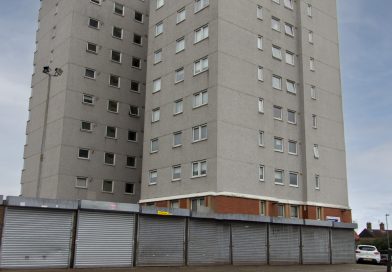
In 1991 and 1993 fatal fires occurred in tower blocks in Southwark and Lambeth respectively. Again rapid fire spread was observed in the stairwell and landing corridor areas. When one considers the construction of a modern tower block, it is obvious that beyond the source of the fire there is precious little present to support combustion, other than the paint that is on the walls and ceilings.

Further fires have also occurred in low and high-rise properties in Birmingham and Edinburgh. Thankfully no one was harmed in these incidents, but again a very rapid rate of fire spread was observed.

And yet on a daily basis this problem is overlooked either when a fire risk assessment is carried out or when it is decided to implement a refurbishment programme.

The Legislation

The Building Regulations Approved Document B 2007 states that the walls and ceilings of the common access areas of buildings of multiple occupancy should be finished with materials that exhibit flame retardance. This applies to all multiple occupancy buildings, be they in commercial, public or private use.

(In this context the phrase multiple occupancy is used to describe places of work, assembly, public usage etc. not just residential as in houses of multiple occupancy i.e. HMO's)

The level of flame retardance required (usually Class 1 or 0) is laid down in the Building Regulations and is determined by appropriate independent testing to BS 476 Parts 6 & 7.

BS 476 Part 7 tests the ability of a material to prevent the spread of flame across its surface, in terms of both extent and rate. The best result is Class 1.

BS 476 Part 6 measures the amount of heat generated by a material when it is burnt under controlled conditions, again in terms of extent and rate. Generally speaking the result is either a pass or a fail.

So what then is Class 0? You might well ask. Class 0 is the highest level of performance achievable and is not defined in the British Standards, but in the Building Regulations as, a material that

  • Gives Class 1 performance when tested to Part 7 AND
  • Passes the Part 6 Test

Attention must be paid to the detail in test reports. For example the tests should have been carried out on the relevant substrate. If someone is specifying a flame retardant system for softwood (a combustible substrate) it should have been tested on softwood. In this case results on plasterboard (non-combustible) would clearly not be relevant or acceptable.


So why isn't it obligatory to specify flame retardant paints every time a communal area is redecorated?

Unfortunately there is a loophole in the legislation. Traditionally the Building Regulations have been interpreted to apply to new build only, unless a material change occurs. A material change usually involves structural alterations, which in turn would require Planning Permission and hence reassessment against the Building Regs. Currently redecoration is not considered a material change.

But surely when multiple occupancy buildings are involved, both common sense and Duty of Care dictate that levels of fire protection should be maintained throughout the life of the building.

Indeed, since the introduction of the Regulatory Reform Order, surely an assessment of the risks presented by the surface finishes present in escape routes and/or communal areas should be an integral part of the fire risk assessment process.

(The Regulatory Reform (Fire Safety) Order was introduced in October 2006. It now places the responsibility on the building owner or occupier to carry out suitable and sufficient fire risk assessments on their premises),

The Reaction of Coatings to Fire

As indicated above coatings can contribute to the spread of fire by

  • Burning readily and thereby encouraging flame to spread across their surface.
  • Burning readily and thereby contributing to the heat of the fire.

So what makes a paint film burn? In very simple terms two main factors can contribute to combustibility

  • Composition - For example, the absence or presence of fire retardant or intumescent ingredients. Also the different resins types and indeed any other components will burn at different rates and intensities. (Yes, water borne paints do burn when dry, as they are organic).
  • Adhesion - If a coating is adhering well to a surface, the surface itself will act as a heat sink, which in the case of a masonry wall would be quite considerable. The coating would therefore prove to be difficult to ignite.

If however the coating is adhering poorly, it will blister and/or delaminate when subjected to the heat of the fire. This will form air gaps that insulate the coating from the substrate, and so the ignition point of the paint will be reached much faster. Furthermore, the blistering and delamination process will also lead to a greater surface area being exposed to heat and oxygen. This in turn will lead to further combustion. On a wider scale, a snowball effect is created, with combustion spreading both across the surface and through the film.

Coatings Fire Risk Analysis

Each and every painted wall and ceiling in the country will have its own unique decorative history, so how do you decide what to do when considering redecoration?

Whilst it is impossible to precisely predict the fire behaviour of an in situ painted surface, (in terms of BS 476 Parts 6 & 7) techniques have been developed whereby one can build up a picture for a suitable risk assessment.

I would suggest that these techniques should collectively be called Coatings Fire Risk Analysis.

Initially, the assessor will carry out a visual inspection of all relevant areas of the building, examining the condition of all the coatings systems present, and noting in particular areas of damage or excessive graffiti.

During this inspection the assessor will also look for any additional fire hazards present and for any fire protection measures that are in place. (In other words the assessor will carry out a simplistic fire risk assessment on the areas to be inspected).

The adhesion of the coatings will then be assessed (both within the film and to the substrate) and samples taken for laboratory analysis.


The laboratory analysis can include assessing the number of layers present, and their thickness, identification of the coating types, and checking for delamination and/or the presence of contaminants between layers.

All the above factors are then combined to produce an assessment of the fire hazard presented by the coatings.

Depending on the outcome of the analysis recommendations are made about the redecoration of the surfaces examined.

Options include:

  • Complete removal of the coatings back to the original substrate (usually necessary if the coatings are in poor condition.)
  • Overcoating with a standard flame retardant system.
  • Overcoating with an Upgrade Flame Retardant System.

(NB: The recommendations made are relevant to each area of the building examined and so the overall recommendations may be a combination of the options listed above).

What is an Upgrade Flame Retardant Systems?

It was stated above that the BS 476 tests should be carried out on a relevant substrate and so what about those systems recommended for use over previous decoration, surely these should have been tested over built up paint?

Of course, and the good news is, that thanks to research carried out in the mid 1990's there is now a combustible 'model' multiple coat system (the Warrington Blue Board).

Obviously if the Blue Board is tested on its own it fails. The paint industry has therefore had to develop systems, which when applied to the Blue Board will upgrade the surface back to Class 0 or 1.


These systems are of course are known as Upgrade Systems

The importance of this development was illustrated in 2001 in a fire in a multiple occupancy building in Islington. Because the walls and ceilings were protected with an Upgrade System the fire, which was deliberately set, did not spread beyond the seat of the fire.

And so, thanks to the positive action of the building owners, (the local authority) the lives of the building occupants were not endangered and the subsequent damage and cost was limited.


For further information Contact:

Dave Haythornthwaite
Salamander Fire Risk Analysis,
39 The Beeches,
Sharples,
Bolton,
Lancs,
BL1 7BS

Tel: 01204 591034

Article Archives
Go Back
Our Sponsors:

© Copyright 2011 Means Of Escape   Terms & Conditions   Privacy Policy

Copyright © 2011 Think Agency - Website Designers Kent